
Martyn’s Law
Martyn’s Law is coming. Is your communication ready?
HOW IT WORKS
Fast and clear communication right where it’s needed
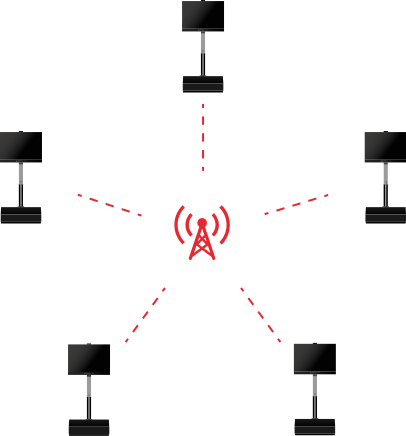
Our crowd communication system lets us inform and warn visitors quickly and clearly. We position screens at tactical spots and control them individually and wirelessly from a central control room. Our crowd communication system has three main functions:
- Safety and emergency announcements
- Dynamic signage and wayfinding
- Visitor information
hikers
Meet our Hikers
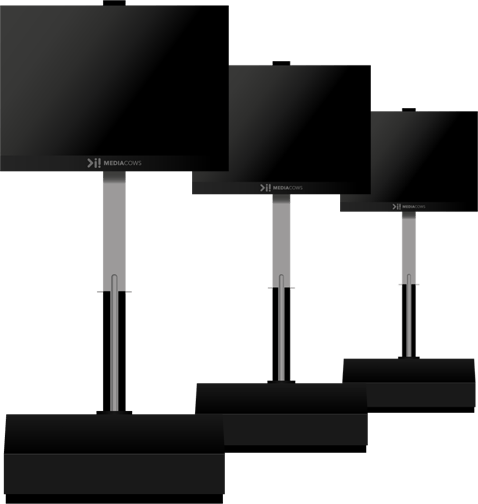
Especially for our crowd communication system we developed the Hiker in-house. These 6 mm LED screens, positioned on a concrete base, are equipped with highly advanced technology. With our own steady wireless connection we control dozens of screens from one central point — without depending on 3G or 4G.
What’s more, our Hikers have a back-up for everything: double wiring, double wireless connection, alternative wireless control and even back-up power. That’s why we guarantee 100% reliability.
messages
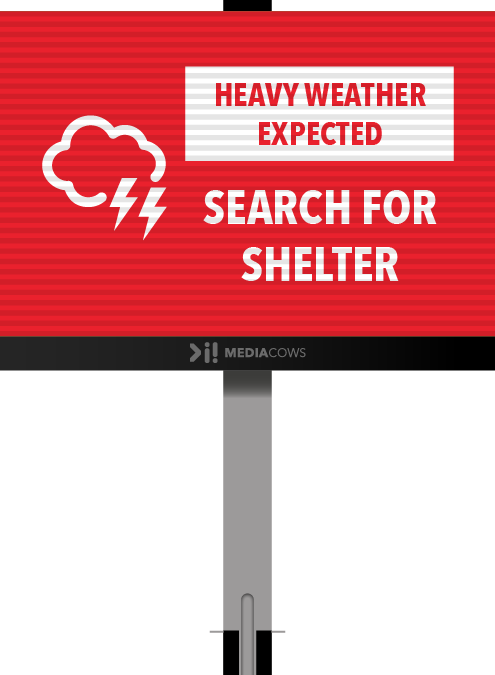
Examples of crowd communication messages



photos
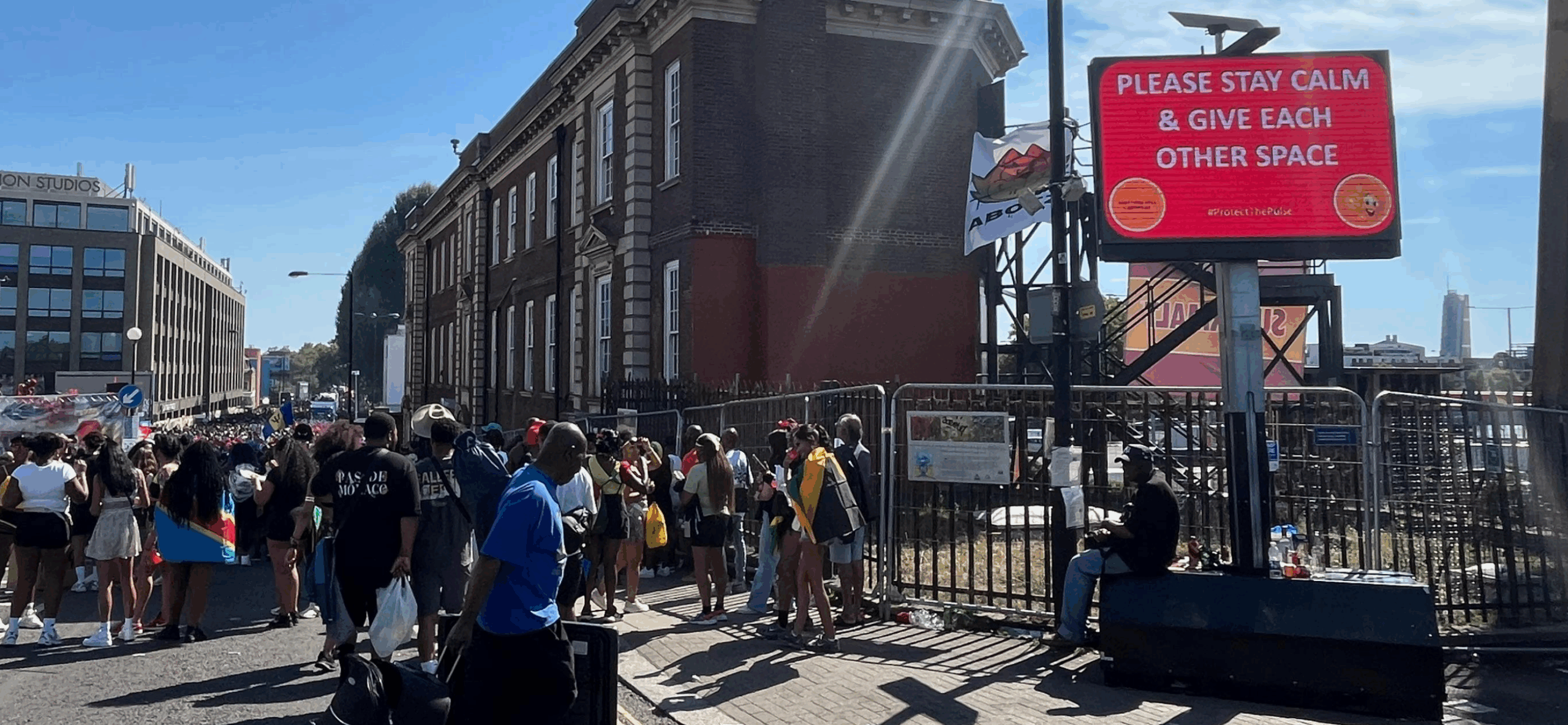
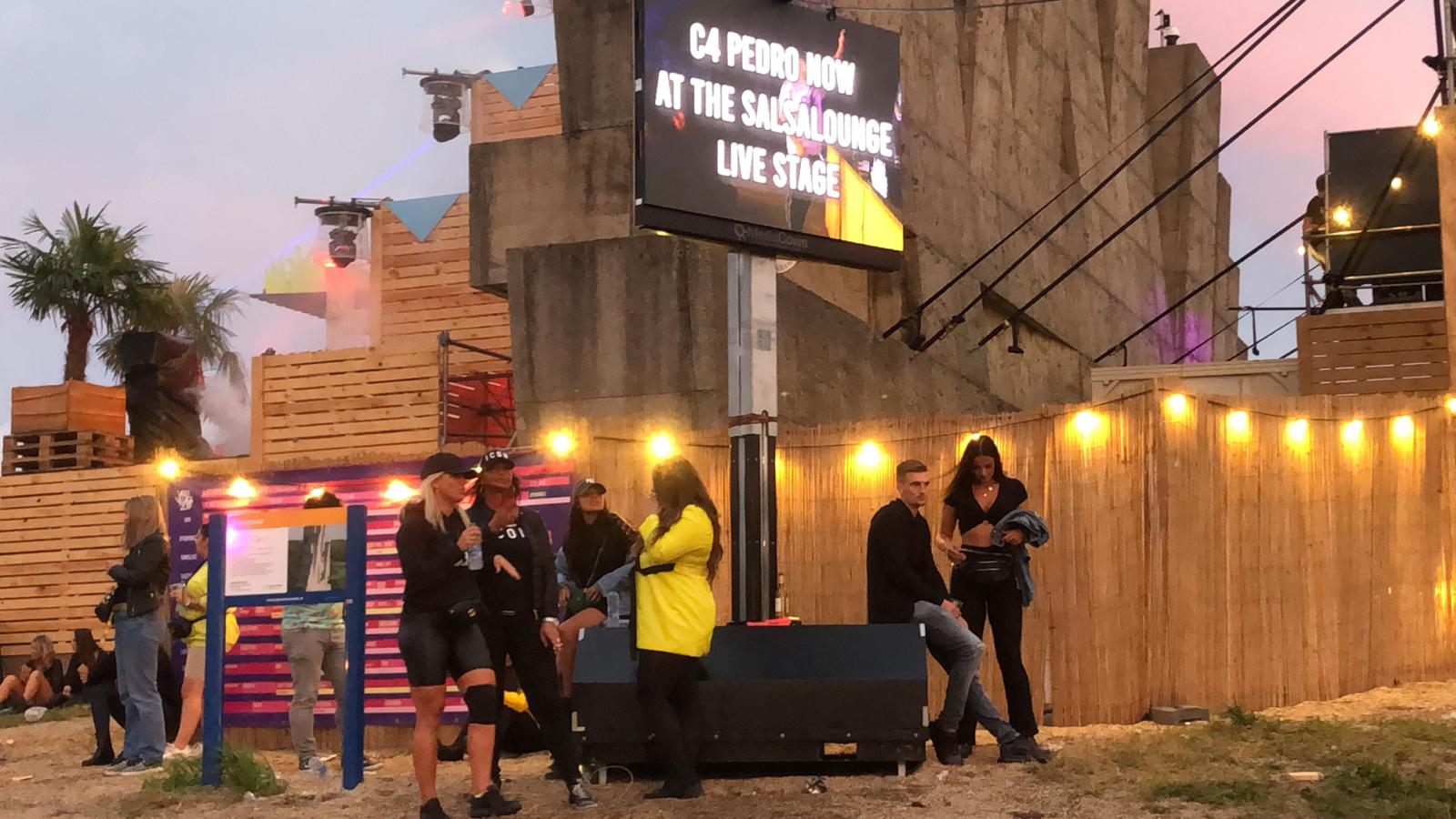
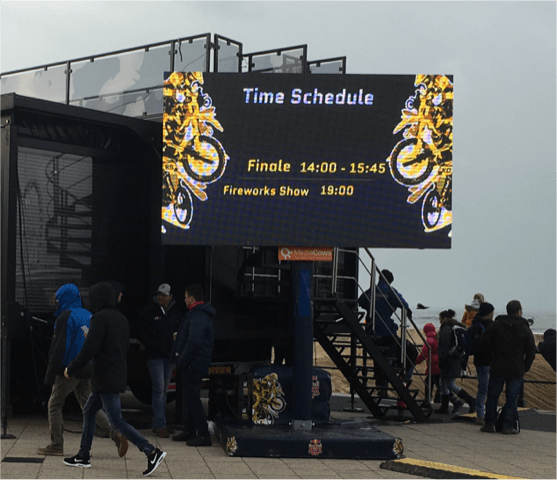
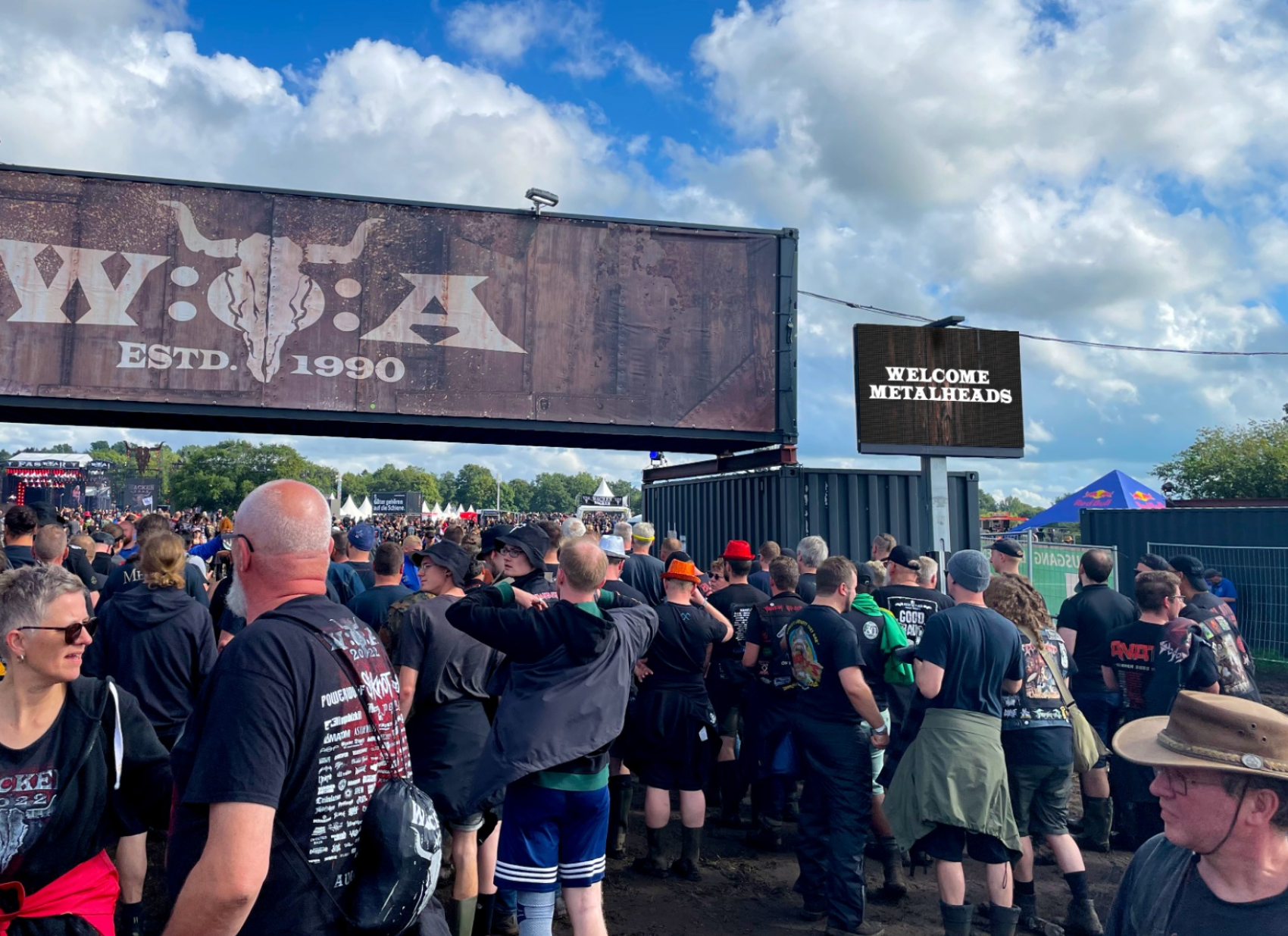
Our Crowd Communication system in action



benefits
How our crowd communication system supports your Martyn’s Law procedures
Warnings in emergencies
In an incident or emergency you communicate quickly and clearly with a large audience.
Communication under Martyn’s Law
Martyn’s Law names communication as one of four public protection procedures. Our screens deliver it over their own broadcast signal (European patent application pending), independent of mobile networks.
Control over crowd flows
With dynamic signage you steer crowd flows, preventing overcrowding in streets, squares and festival areas.
Individual control
From the control room you drive each screen individually, so you inform and warn precisely per location — the instruction that fits where people actually are.
Ready before it matters
Between incidents the screens show programme, weather and travel information. Visitors are used to looking at them, so they look when it counts.
A back-up for everything
Our system is redundant and vandal-resistant, with back-up power — so we keep informing visitors even if technology fails.
Martyn’s Law does not prescribe equipment; the responsible person decides what is reasonably practicable.
cases
How others use our crowd communication system

Notting Hill Carnival is one of the largest street festivals in the world — and the biggest in Europe. On 24 and 25 August 2025, close to two million people filled the streets of West London to celebrate Caribbean culture.
(more…)

The British Grand Prix is one of the largest sporting events in the UK. In 2025, Silverstone welcomed 500,000 people through its gates across the race weekend of 4-6 July — a figure the circuit published itself. The hardest moment of an event that size is not the arrival. It is the exit: a few hundred thousand people deciding to leave at roughly the same time, most of them heading for a shuttle bus.

The Nijmegen Four Days Marches (Vierdaagsefeesten) are the largest free festival in the Netherlands — and the birthplace of crowd communication. Every year, more than 2.1 million visitors come to the city. Guiding that many people safely and smoothly through the city centre calls for clear, real-time communication. That is why the organisation brought in crowd communication from CrowdCows. (more…)
Martyn’s Law and crowd management: getting the communication right
Martyn’s Law — formally the Terrorism (Protection of Premises) Act 2025 — requires certain UK premises and events to be prepared to keep people safe in the event of a terrorist attack. It received Royal Assent on 3 April 2025 and is expected to come into force after an implementation period of at least 24 months, around 2027. The Home Office published its statutory guidance in April 2026. The law is named after Martyn Hett, one of the 22 people killed in the 2017 Manchester Arena attack, and was driven by the campaign led by his mother, Figen Murray.
For the first time, those responsible for many public venues and events will be legally required to plan how they protect people — and communication sits at the heart of that. Of the four core “public protection procedures” the law sets out — evacuation, invacuation, lockdown and communication — communication is the thread that makes the other three work. Not forcing, but steering smarter.
Not sure where your venue or event stands?
Request a free scope check. We walk through the questions the Act asks — capacity, tier, the four procedures, and what “communicating with people on site” looks like in practice. No slides, no sales pitch: a short written assessment by email, and it stays yours.
Scope
Who Martyn’s Law applies to
The law applies across England, Wales, Scotland and Northern Ireland, and splits in-scope premises and events into two tiers based on how many people are reasonably expected to be present at the same time:
Standard tier (200–799 people)
must put in place public protection procedures (evacuation, invacuation, lockdown and communication). The emphasis is on planning and readiness; there is no requirement to document them or install physical measures. In short: think and plan.
Enhanced tier (800 or more people)
must do all of the above and put in place public protection measures covering monitoring, movement, physical security and information security. They must also document their compliance, submit it to the Security Industry Authority (SIA), designate a senior individual and keep their measures under review. In short: build and prove.
Public events are in scope from a capacity of 800 or more. Some premises — such as schools and places of worship — fall under the standard tier regardless of capacity. The penalties for enhanced-tier breaches are significant: up to £18 million or 5% of qualifying worldwide revenue, whichever is greater, plus daily penalties for ongoing contraventions.
The four procedures
The four procedures — and why communication ties them together
Martyn’s Law defines four core public protection procedures:
Evacuation
moving people safely out of the premises.
Invacuation
moving people to a safer area inside the premises.
Lockdown
securing the premises and restricting access.
Communication
getting clear, reliable messages to staff and the public quickly.
Each of the first three depends on the fourth. You cannot evacuate, invacuate or lock down a crowd you cannot reach. The statutory guidance is explicit that organisations should check whether their communication methods are fast, clear and reliable. That is exactly the problem we solve.
Crowd management
Martyn’s Law and crowd management: where the two meet
These are not the same thing, and treating them as one causes most of the confusion. Crowd management is a discipline — the practice of moving large numbers of people safely, with stewards, barriers, routes and capacity planning. Martyn’s Law is a legal duty — a requirement on certain premises and events to be prepared for a terrorist attack.
They overlap, but they are not interchangeable. A venue can have excellent crowd management and still not answer what the Act asks. A venue can also satisfy the Act on paper and still handle a busy Saturday badly.
Where they actually meet
At communication. Crowd management already depends on reaching people — telling them which route to take, where the queue is shorter, when to move. Section 5(3)(d) asks for a communication procedure for a different reason: getting information to people during an attack. The channel is the same channel.
That is the practical consequence for a crowd management plan: the system you use daily to spread density is the system that has to carry an emergency instruction. If it only works in good conditions, it does not answer the question the Act puts.
Three questions a crowd management plan should be able to answer
01
Reach
Would a message land everywhere people actually are — the far corner of the site, the queue outside, the campsite? Para. 7.49 asks the responsible person to consider exactly this.
02
Independence
Does it still work when the mobile network is saturated? A crowd dense enough to need managing is a crowd dense enough to break the network.
03
Restraint
Can you communicate without triggering an evacuation you did not intend? The guidance treats this as a separate consideration, and it is the one most plans skip.
None of this requires a purchase. The guidance says so in as many words: “It is not mandatory to use third-party products or services to comply with the Act’s requirements” (para. 6.7). What it does require is that you can answer the questions.
Where CrowdCows fits
Where CrowdCows fits — the communication layer
To be clear: meeting Martyn’s Law is broader than communication alone. Risk assessment, procedures, training and — for enhanced premises — physical measures are for you and your security advisers, and nothing on this page is legal advice. What we do is the communication layer, at the scale and reliability these situations demand.
We place our HIKER screens — robust LED screens on a concrete base — at tactical points across a site, route or venue, and drive each one individually and wirelessly from a single control room. The system is built for situations where mistakes have major consequences: redundant, vandal-resistant and equipped with backup power, so communication keeps working even if technology fails. In an emergency, safety messages automatically override all other content. And because a screen that shows information is not the same as a screen that changes behaviour, we apply behavioural-psychology techniques so messages actually land. Whether you need to steer a crowd along a safe route, hold people in place, or push an emergency instruction in seconds, our system is built for exactly the moments Martyn’s Law asks you to prepare for.
Proven
Proven where it matters most
This is not theory. At Notting Hill Carnival — one of the most demanding crowd environments in the UK — we ran 14 HIKER screens from the Control Room to steer up to two million visitors, and the Metropolitan Police’s Carnival commander pointed to the screens on the BBC. At the British Grand Prix at Silverstone, we guided the exit of a vast motorsport crowd with screens and dynamic signage, controlled live from the Event Control Centre. The same approach underpins our wider crowd communication work across Europe’s largest events.
FAQ
Frequently asked questions
What is Martyn's Law?
The law is named after Martyn Hett, one of the 22 people killed in the 2017 Manchester Arena attack. The aim is simple: to raise the baseline of preparedness so that, if the worst happens, staff and the public know what to do.
Who does it apply to, and what are the two tiers?
Standard tier covers 200–799 people: you must put in place public protection procedures (evacuation, invacuation, lockdown and communication), but there is no requirement to document them or install physical measures. Enhanced tier covers 800 or more: all of the above, plus public protection measures covering monitoring, movement, physical security and information security — documented, submitted to the Security Industry Authority, with a designated senior individual.
Public events are in scope from 800 or more. Some premises, such as schools and places of worship, fall under the standard tier regardless of capacity. To confirm where your venue or event sits, check the Home Office statutory guidance or your security adviser — this is general information, not legal advice.
What are the four public protection procedures?
The first three all depend on the fourth. You cannot evacuate, invacuate or lock down a crowd you cannot reach — calmly, clearly and at the right moment. That is why the guidance asks organisations to check whether their communication methods are fast, clear and reliable.
How can crowd communication help you meet the communication duty?
We place HIKER screens at tactical points and drive each one individually and wirelessly from one control room. The system is redundant, vandal-resistant and runs on backup power, and in an emergency safety messages automatically override all other content. We also apply behavioural-psychology techniques so messages change behaviour, not just inform. Whether you need to guide a crowd along a safe route, hold people in place, or push an instruction in seconds, it is built for exactly the situations the law asks you to prepare for.
Does Martyn's Law require you to buy equipment?
No. The statutory guidance says so in as many words. Read the paragraph references, including the nuance most summaries leave out.
What does the communication procedure actually ask for?
Section 5(3)(d) asks for a procedure to provide information to people on the premises; para. 7.48 lists four considerations and para. 7.49 three more for larger sites. Read the communication procedure explained, including what the guidance deliberately leaves to you.
What goes in a Martyn's Law communication document?
Para. 8.61 sets out what the document should contain, the 30-day rule applies, and the notification duty applies to both tiers, not just the enhanced one. Read what goes in the document.
How do you check whether the Act applies to your premises or event?
By the thresholds, counting your staff as well as visitors, and for events by the perimeter test. Run the scope check, including the point about SIA notification that most summaries get wrong.
Does Martyn's Law cover festivals and outdoor events?
Most outdoor events are not covered, and it is worth knowing why before you budget for something you do not need. Read Martyn’s Law and festivals.
What is the Martyn's Law timeline?
Some dates are fixed, others are only expected. Read the timeline for what is fixed, what is expected, and which preparation is worth doing in which order.
When does Martyn's Law come into force?
Does my venue or event fall under Martyn's Law?
What is the communication duty under Martyn's Law?
Is CrowdCows a Martyn's Law compliance solution?
What are the penalties for non-compliance?
Can you rely on mobile phones or apps to warn a crowd?
Not reliably. A realistic 4G cell carries only around 250 attached devices per sector and roughly 60–100 actively connected at once, so a large crowd overwhelms a handful of masts. In an incident it is worse: during the 7 July 2005 London bombings one operator’s call volume rose 250% and its network hit capacity by 10am. Any safety plan that depends on visitors’ phones, an app or signal is fragile. See the full breakdown, with sources.
What makes CrowdCows technology different?
Our technology — for which a European patent application is pending — drives video and audio independently over its own broadcast signal, with no reliance on mobile networks, public IP networks or cabling. Because it does not depend on those networks, it keeps working precisely when they are overloaded or targeted — the scenario Martyn’s Law is designed for.
What happens if mobile networks or IP systems go down during an incident?
That is exactly when broadcast-based crowd communication earns its place. CrowdCows reaches every screen on site at the same time over its own signal, independently of the mobile network and the public internet, so you can still inform and direct your whole crowd when other systems fail.
CONTACT
Request a free scope check
Tell us briefly about your venue or event. We reply within one working day by email with a short written scope check: what the questions are, how comparable venues answer them, and where communication fits. A call is optional. Whether you act on it is entirely up to you.
Martyn’s Law Communication Readiness Checklist
Martyn’s Law affects an estimated 155,000 standard-tier and 25,000 enhanced-tier premises across the UK. This five-minute self-check covers the one procedure most venues underestimate: communicating with the people on site. Enter your email and we send the PDF straight away — no follow-up sequence, one email.
Scope at a glance
Whether Martyn’s Law applies to you — and which tier — comes down to how many people may be present at the same time, staff included:
- Standard tier: 200 to 799 people.
- Enhanced tier: 800 or more people.
- Qualifying events: public, with entry checks, and 800 or more people.
Read more: Standard tier vs enhanced tier, explained · The notification requirement, explained. Source: SIA / GOV.UK.
